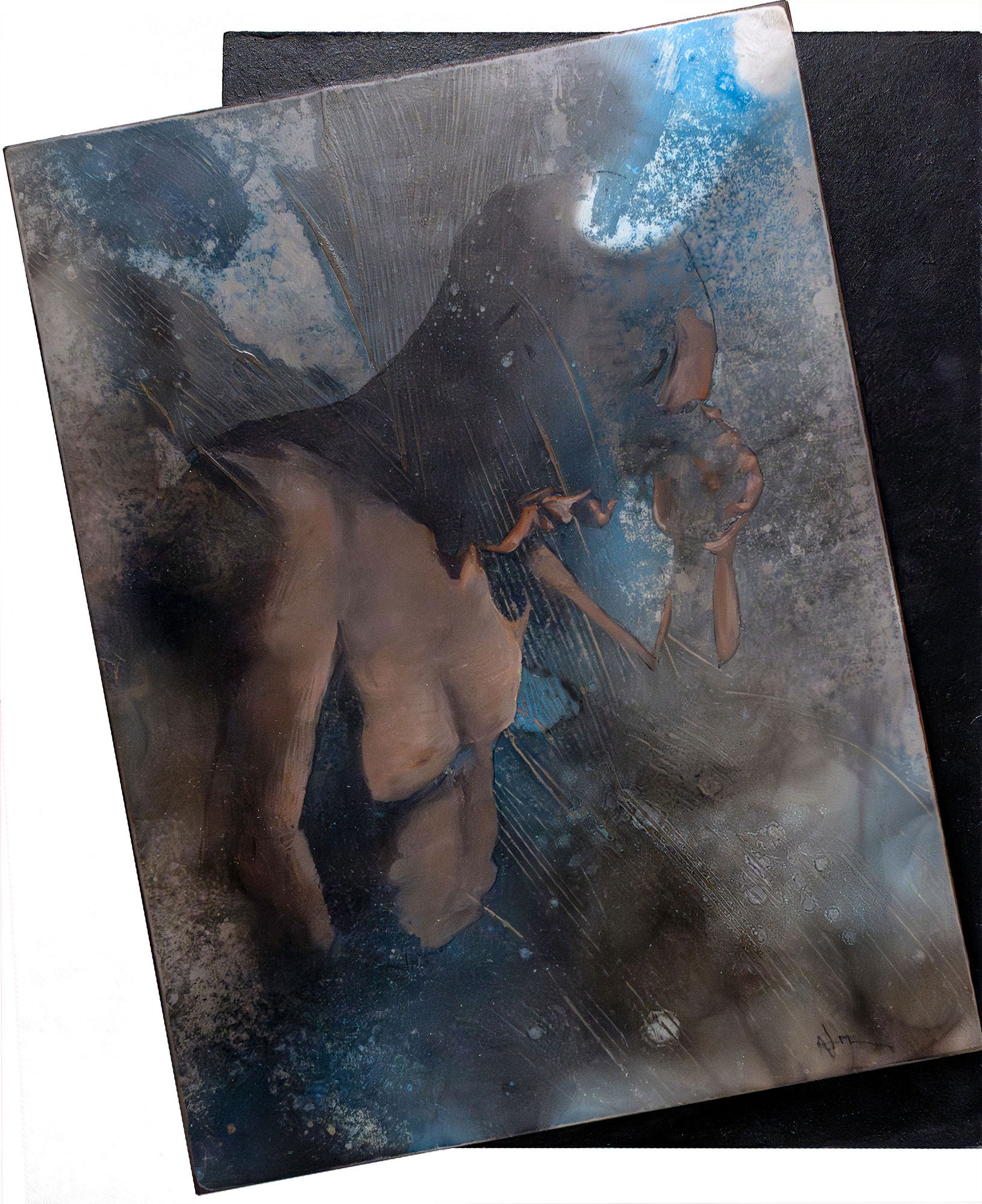
Coan
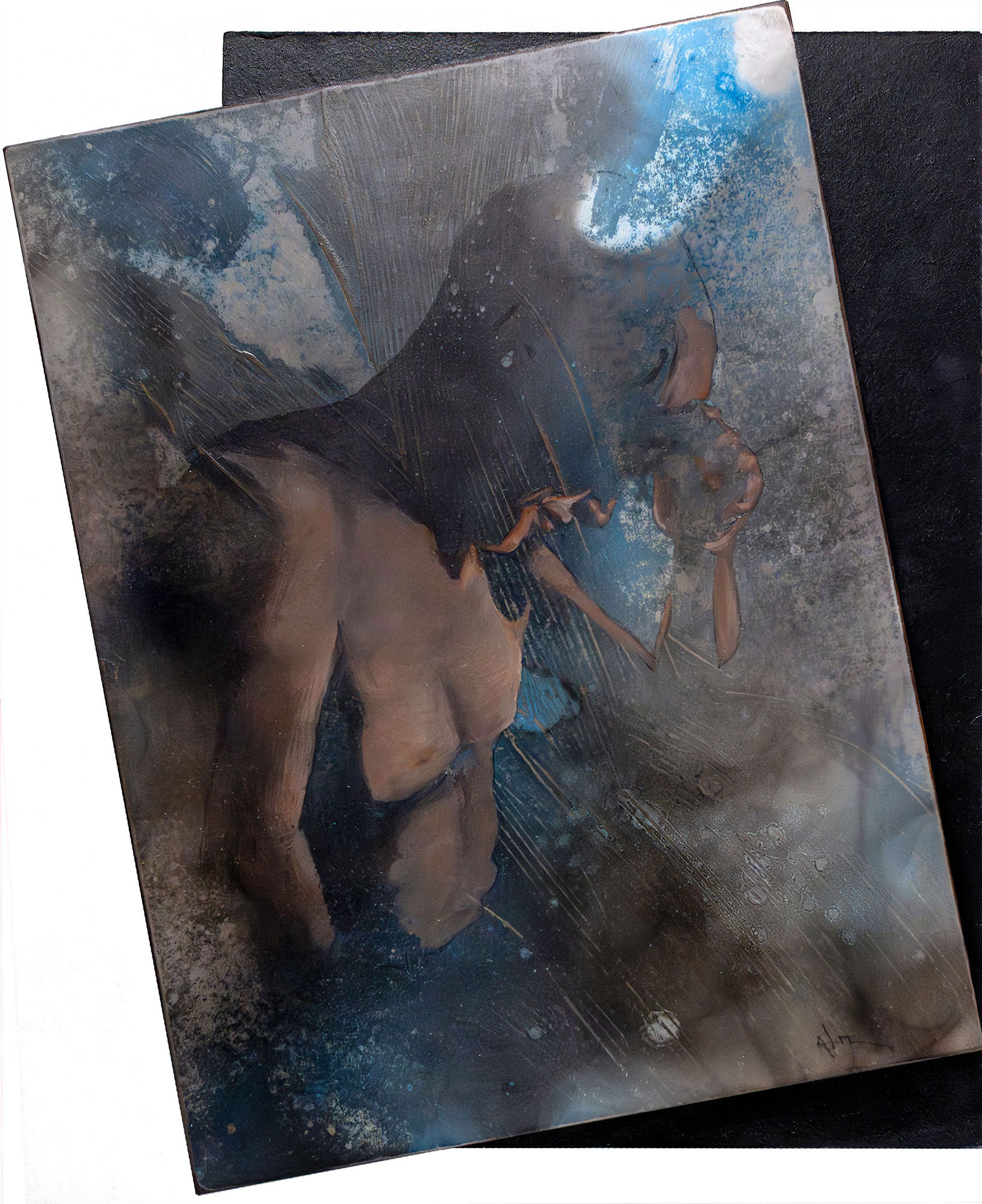
In the quiet conversations with trusted companions, and in the expansive love that followed, I began to understand that becoming is not a singular moment of arrival, but a continuous unfolding. It is not a fixed destination waiting somewhere ahead, but a living, breathing process, one shaped by the people who hold space for us, the environments that allow us to grow, and the parts of ourselves we once believed had to be left behind.
My transition began in 2014. For years, I thought becoming meant choosing, choosing a side, choosing a presentation, choosing which parts of myself were allowed to exist and which needed to be discarded. I believed that in order to be seen as the man I knew myself to be, I had to narrow myself into something clearly defined and unmistakable. Masculinity, to me, felt like something that needed to be protected. Guarded. Reinforced. And so, I learned how to perform it.
I learned how to quiet anything that might contradict it. I distanced myself from the parts of my past that felt too feminine, too soft, too complicated. I treated them as remnants of a life I needed to move beyond, rather than pieces of a life that had shaped me. For a long time, I thought that was what becoming required: separation.
But the truth is, what I needed was not separation. It was integration.
That realization did not come all at once. It came slowly, and most clearly after the end of my marriage in 2021. That chapter of my life had contained both support and pressure care, but also an unspoken expectation that my masculinity needed to be consistent, legible, and unwavering. Within that space, I often felt like I had to overcompensate. To prove myself. To ensure that nothing about me could be misread.
When that relationship ended, I found myself in unfamiliar territory. There was grief, yes, but there was also space. And within that space, something began to shift. What surprised me most was not just the internal reflection, but the people who showed up around me.
In a time when I was trying to understand myself more fully than ever before, it was women in my life both personal and professional who stepped forward in ways I had not expected. They checked in on me. They created space for conversation. They offered care, consistency, and presence without condition.
And perhaps most importantly, they saw me.
Not partially. Not cautiously. Not with hesitation. But fully as a man.
There was something profoundly healing in that. These were relationships that did not require me to distance myself from femininity in order to be affirmed in my masculinity. I did not have to perform or filter myself. I could exist in conversation with them in ways that felt familiar, connective, and deeply human.
The way women connect the depth of conversation, the emotional openness, the willingness to sit in complexity was something I realized I had been missing. Not because it was unavailable to me, but because I had convinced myself that accessing it might somehow undermine who I was becoming.
But it didn’t.
Instead, it restored something in me.
It allowed me to reconnect with a form of relational intimacy that had always been part of my life, but that I had distanced myself from in an effort to be understood. Through those connections, I began to realize that I had always treated both my masculinity and femininity as separate, like a yin and yang needing balance. But in truth, I learned they were not counterparts; they were always melding, flowing in and through each other, without needing a rigid equilibrium.
At the same time, I had people in my life who grounded me in other ways—who reflected forms of masculinity that were expansive rather than restrictive. Masculinity that did not demand the absence of femininity, but instead made space for it. Masculinity that could build, protect, and hold steady, while also remaining open, flexible, and human.
And then, I met my husband.
If the community around me helped me rediscover balance, my husband gave me a place where that balance could fully exist. There is a safety in him that is not controlling, not limiting, but expansive. He allows me to move, to grow, to explore, to question without ever making me feel like I am drifting too far from who I am.
He sees me completely loving who I am today while cherishing every part of the journey that shaped me. He celebrates me in ways he may never fully realize, healing my soul in places I didn't know needed healing.
For the first time, I felt no need to divide myself. No need to separate the person I had been from the person I was becoming. No need to choose between masculinity and femininity as if they were mirroring forces.
Instead, I began to understand that they had always been part of me.
This understanding shows up in the smallest, most ordinary parts of my life. In the music I listen to in the stories I engage with, the voices I gravitate toward, the ways I allow myself to experience joy without questioning whether it aligns with how I am perceived.
These are not contradictions. They are continuations.
They are reminders that my identity is not defined by what I exclude, but by what I allow. For a long time, I believed my life existed in two separate paths one before my transition, and one after. Two distinct identities that could not coexist. The divide between them felt immense, like something that could only be crossed by leaving one side behind.
But that is not what happened.
Instead, those paths began to converge.
Not suddenly. Not perfectly. But steadily.
And in that convergence, I did not lose anything. I gained something I had not realized I was missing: wholeness.
I am no longer trying to distance myself from who I was in order to justify who I am. I am no longer narrowing myself to fit within a singular definition. I am letting myself expand like the universe, flowing in and out between pay parts to create a whole.
I am learning to hold all of it.
To recognize that becoming is not about arriving at a final version of myself, but about allowing myself to continue unfolding. To change. To integrate. To expand.
I am not standing at the edge of a divide anymore.
I am standing at the place where everything meets.
And from here, I am not choosing who I am allowed to be.
I am simply letting myself become.