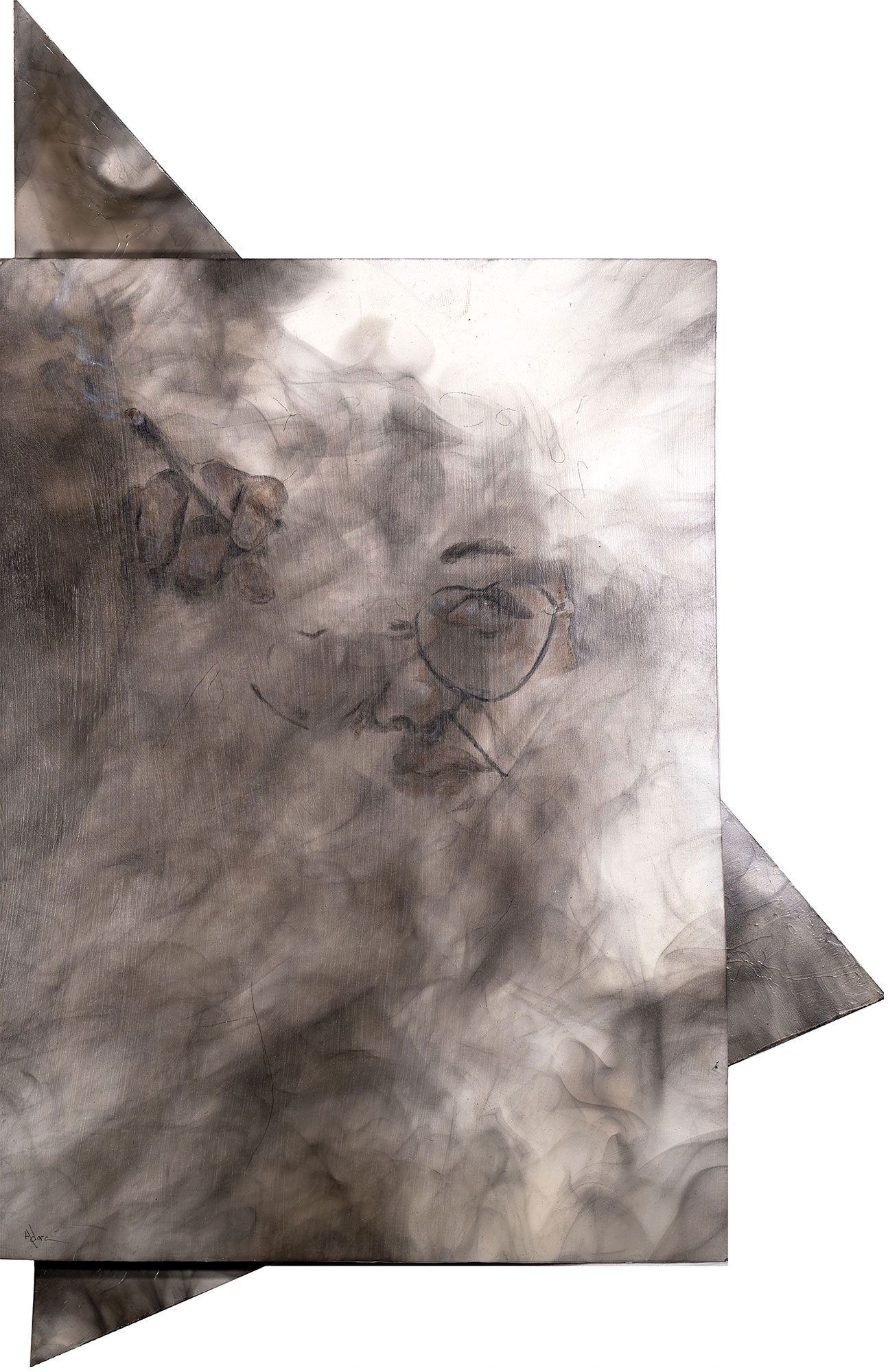
Juju
On Chosen Family and Lineage:
From Being Raised to Becoming a Future Ancestor
“It takes a village to raise a JuJu.” Raised as the ‘baby’ of many queer communities, I learned that lineage is something we create through care, mentorship, and collective vision. I am the first daughter of my mother, a Black Chicagoan descended from enslaved people of the American South who journeyed north during the Great Migration, and the second son of my Indo-Chinese immigrant father from Jakarta, Indonesia. While assigned female at birth, I carry both daughter and son within me, embodying the multiplicity of my ancestry. Now, as a community leader and co-founder of the Future Ancestors, a mutual aid and land trust group rooted in communal care and ancestral remembering, I strive to ensure that gender-diverse people not only survive but thrive and age with dignity. Chosen family is not a substitute for lineage—it is lineage itself.
I am a gender-fluid, non-binary person who has been fortunate enough to experience love and support from both my biological family and my chosen family. My biological family has always been close-knit, and I recognize the privilege of having their enduring presence in my life. However, even within that love, I have always been different. My journey toward self-actualization, my modes of self-expression, and my aspirations often existed outside their framework of understanding. This difference sometimes created a subtle distance—an emotional gap not born from rejection, but from a lack of shared language or experience. While they loved me deeply, they could not always fully see or comprehend the fullness of who I was becoming.
As a young adult, I stepped into the world carrying both the grounding of my biological family and the uncertainty of forging a life that did not follow traditional scripts. It was during this formative period that I was embraced by a series of queer communities—people who had no obligation through blood or duty to care for me. Yet, they chose to. Though society deems us adults at eighteen, we remain tender and newly formed, still learning how to navigate identity, autonomy, and belonging. These chosen families took on the profound task of rearing me in ways that extended far beyond friendship.
They held me through my uncertainties and celebrated my discoveries. They tolerated my growing pains and challenged me to take responsibility for my own life. They taught me how to embody autonomy while remaining accountable to community. In a world that often sought to diminish or erase my personhood, they affirmed my right to exist expansively. They modeled empowerment and resilience, demonstrating that thriving as a gender-diverse person is not only possible but deeply communal. Through their guidance, I learned that survival is a collective act and that joy, too, can be cultivated together.
For many years, I was the “baby” of these communities. I was the one receiving wisdom, guidance, and care. Elders and peers alike became mirrors reflecting possibilities for my own future. They showed me what it meant to age with dignity, creativity, and authenticity as a gender-diverse person. Through them, I witnessed alternative models of family—structures rooted not in obligation but in intentionality, reciprocity, and love.
Throughout my life, a recurring theme has been that of the reluctant leader. Even as people deferred to me for guidance or support, I often struggled to understand why. Leadership felt like something bestowed upon me rather than something I actively chose. So often I failed to shoulder that responsibility. Yet, as I entered my thirties, a profound shift occurred. I began to recognize that the years of being nurtured by my communities had not only shaped me—they had prepared me. The lessons, care, and examples offered by those who came before me were seeds that had quietly taken root. I realized that I was now ready to step into the role that others had once held for me.
Choosing to be child-free and not to pursue traditional markers of family such as marriage or parenthood has not diminished my sense of lineage. Instead, it has expanded it. Family, for me, is not confined to biological ties or societal expectations; it is an intentional network of care and commitment. Together with my community, I have helped to cultivate a vision of collective aging—one where we support one another in building lives of security, dignity, and joy. We envision a community with rocking chairs on shared porches, land that holds our stories, and interdependent systems of care that ensure no one is left behind.
This vision has taken tangible form through the creation of a mutual aid and land trust collective known as Future Ancestors. Our intergenerational group is composed of ethnically and culturally diverse gender-nonconforming individuals who have, in various ways, been separated from traditions that once revered gender fluidity. Many Indigenous cultures recognized and honored gender-diverse people as spiritual and social leaders. While colonization disrupted these lineages, we are committed to remembering and reimagining them. Through our collective efforts, we seek to reclaim a sense of belonging to land, to ancestry, and to one another.
Future Ancestors is rooted in the belief that we deserve not only to survive but to age with intention and security. Our work centers on mutual aid, land stewardship, and the cultivation of intergenerational community. By witnessing one another step into our inherent power, we activate a process of ancestral remembering. Each act of care, each gathering, and each shared dream becomes a thread in the tapestry of a lineage that we are actively weaving.
Stepping into leadership within this collective has allowed me to understand lineage in a new way. I am not only the recipient of the wisdom of those who came before me; I am also a conduit through which that wisdom continues to flow. The care I once received now informs the care I offer to others. In this sense, leadership is not about authority but about stewardship—holding space for community, nurturing collective vision, and ensuring that the pathways we create remain accessible to future generations.
To consider oneself a “Future Ancestor” is to live with an awareness of legacy. It is an acknowledgment that our actions today shape the world that those who come after us will inherit. For gender-diverse people, this concept carries particular resonance. In the absence of traditional genealogies, we craft our own ancestral lines through mentorship, creativity, and community-building. We become the elders we once sought, embodying the possibilities we needed to witness.
My journey from being the baby of many queer communities to becoming a community leader reflects the cyclical nature of care and lineage. The village that raised me instilled not only a sense of belonging but also a responsibility to continue that cycle. Every lesson imparted to me now lives on through the spaces I help to create and the relationships I nurture.
When I reflect on the dreams of my ancestors—both biological and chosen—I am struck by the realization that their wildest aspirations are manifesting in the present. The freedom to live authentically, to build intentional communities, and to reclaim connections to land and spirit are not abstract ideals; they are realities we are actively shaping. In this way, we honor those who came before us while simultaneously laying the groundwork for those yet to come.
“It takes a village to raise a JuJu” is not merely a reflection on my past; it is a guiding philosophy for my future. The care I received as the “baby” of my communities has empowered me to step into leadership with humility and purpose. Through the work of Future Ancestors, I strive to ensure that gender-diverse people have the opportunity not only to exist but to thrive, age, and be remembered.
As I continue this journey, I hold a deep sense of gratitude for the many individuals who have shaped my path. Their love and mentorship have become the foundation upon which I now stand. In embracing my role as a Future Ancestor, I am committed to fostering spaces where others can experience the same affirmation and possibility that once nurtured me.
Ultimately, chosen family is not a substitute for lineage—it is lineage itself. It is the intentional weaving of relationships that transcend bloodlines and societal expectations. Through community, mentorship, and collective vision, we create enduring legacies of care. I have seen my ancestors’ wildest dreams, and it is us—gathered together, reclaiming our stories, and building a future rooted in love, resilience, and belonging.