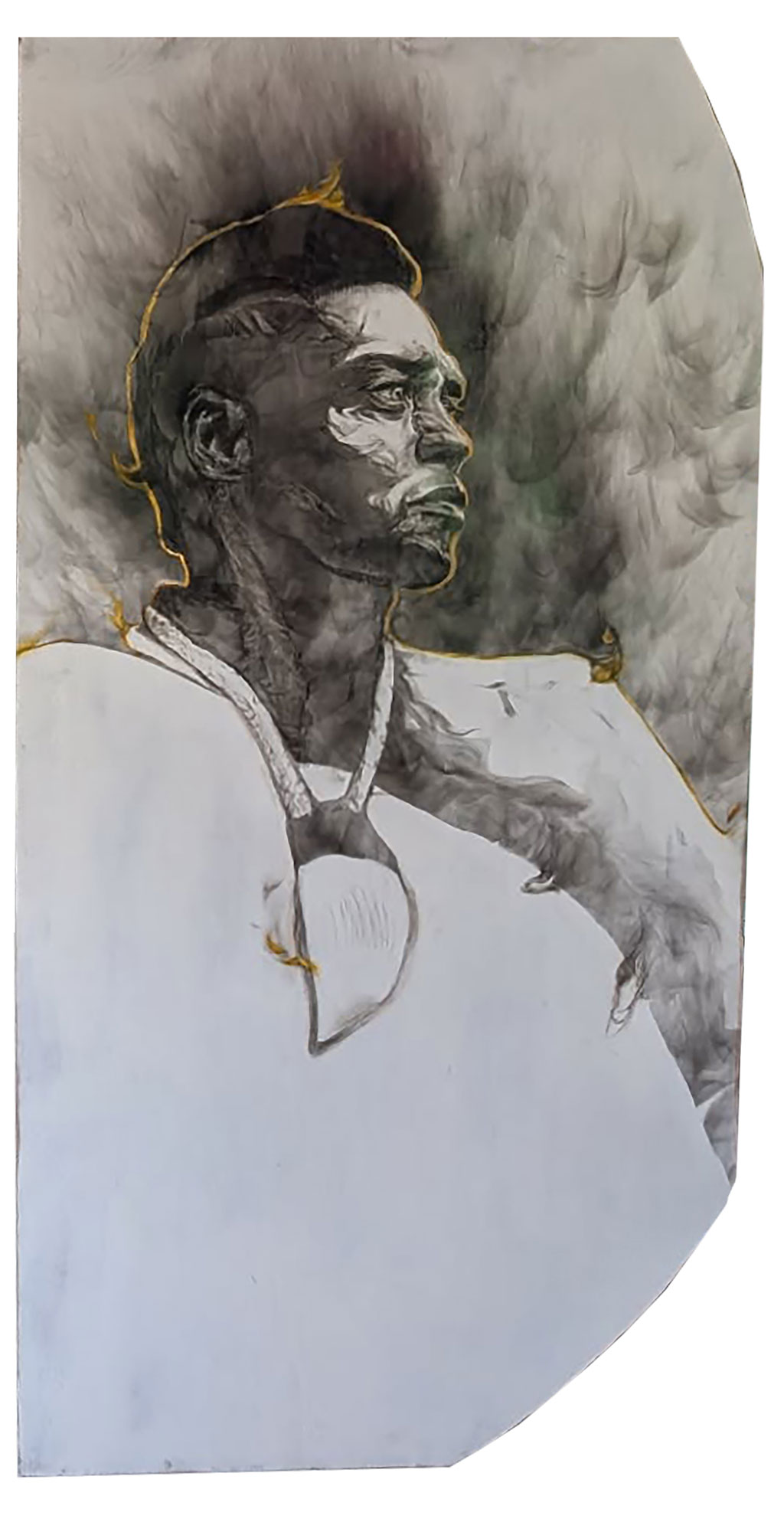
Lanakila
Sacred Traditional Roles
I’m just going to share my perspective as far as traditional roles go. In my opinion and understanding, these are roles and responsibilities from a traditional Hawaiian perspective.
We very much had a concept of things that are strong practices or traditions carried by kāne, carried by wahine, and then those that can transcend between realms. I believe it's super important to understand that, even though history books—most often not written by kanaka—read and speak of these as gender roles, they were mostly just responsibilities for a healthy community. Over time, there was a recognition of where energy is better suited for particular responsibilities.
One way we describe that is Kū and Hina energies. Kū energy is for things that require more vigorous or laborious work, while Hina energy is more about the caring, nurturing, and calm. What’s important to note is that Kū and Hina are not automatically "Kū is male" and "Hina is female." No, it’s these energies of our universe that help to create balance, or a kaulike. It’s not that only men carried Kū or only wahine carried Hina. Hina is stronger most often within the concept of the ability to birth and the nurturing, soft energy that helps for healing and rest, while Kū is the vigorous energy.
Again, that vigorous, constructive energy does not belong to just one sex. A person can carry both energies, where they aren't too much with Hina or too much with Kū, but can actually transcend. Physically, someone might have a kino that is very strong and powerful in that way—physically Kū—yet their mannerisms or energies are also very Hina, and vice versa.
I think that’s why it’s "gendered" but not "sexual" in the sense of only men doing this or only females doing that. You hear that often and it’s written that way, but those of us who live the culture tend to find it’s more about responsibility. For example, kapa making was said to be predominantly a wahine responsibility. Hina is a goddess of kapa making because it’s something where you have to sit and be present. What you’re pounding is going to protect, warm, and cover. That practice requires a level of attention to detail and a gentleness when working, which is a Hina concept. But did that mean men were not allowed to make kapa? No. If you didn’t have a wahine, or they didn’t want to make it for you and you still needed tapa, you had to make it.
In some ways, cooking was predominantly seen as a responsibility for the kāne. That’s because cooking in the imu was seen as a Kū energy. You had to thrust and dig into the earth, making the lua (the pit), and doing the laborious work of hauling the rocks, chopping the banana trees, and bringing all these things together. You activate the fire in the earth and mound the soil—it’s like external energies coming into the earth. The earth itself is a Hina, feminine, mothering energy. By thrusting and digging the holes, you are putting that male energy into the lua to activate the fire, almost like the idea of impregnation, and then helping to assist in the birthing, which is the opening of the imu.
But if there was no man around or willing to do it, did that mean the women just didn't cook? No. Wahine could do it, but it was about distributing responsibilities—"I do this part better, you do that part better." I actually don’t think these roles were as rigid as Western historians write about them. We have stories that speak of these things; for instance, some people today say "only men do this," but we have stories of females mixing ‘awa. It was a common thing. You have different concepts like that. I hope that's not too confusing.
The Art of Becoming
As much as people may, from the outside look in, think that culture and tradition are unbroken and unchanged—and always have been—we are actually always constantly shifting and evolving. But the steering of that evolution is important. Culture, like the Earth, is in constant shift and change. I do believe that life is all about transitions, transformations, and constant change.
It's constant; all things are dying, and things are sprouting new. You know, our ‘āina shifts and changes with every rainstorm, every wind, and every volcanic eruption. Entire landscapes can be completely shifted and changed. And therefore, even in society, many people have the idea that roots are settled in religious ideologies. I believe that Puritan ideology—that there is but one way, one truth, and one God, and everyone has to find their way to that one path, or even that life has a preset, predetermined path for you—comes from a small-minded group in the blink of human existence that just happens to have a lot of power in their current time. It has imposed such narrow-mindedness onto vast societies. But I do believe that we're seeing a shift and change; it wasn't always like that, and it is shifting and changing again.
I also respect and understand that change is not an easy thing. I think all people, to a degree, resist shift or change, especially when it is out of their comfort zone and their normal, which is understandable. So when we are on a journey, I think it's always a two-way street—or multiple different ways—where the individual and the communal must interact. Each individual needs to know they are part of a community and therefore needs to be cognizant of what things change within themselves, weighing those impacts against the wider community.
Conversely, a collective society or community needs to understand that they are a collective of individuals, and there needs to be support for every individual as we all live through our shifts and changes. The world has always shifted and changed; that's part of the diversity of growth. Different things take different paths, which create different lines of evolution. I believe it all takes time and that there are supposed paths that are not meant to be lived forever. Certain things will shift and change.
I'm not one who believes in preset destinies necessarily—that everyone has the ability to take their own journey—but we must be cognizant that as individuals evolving, we are never living our lives by ourselves. We are part of an ecology, whether that ecology is healthy right now or not. You're part of a bigger network, so we need to be cognizant of how our shifts and changes affect the collective. If we are unable to understand that, then one needs to look at their individual path.
But again, it's a two-way street: the function of a community is to support individuals, and individuals need to help support the community. It's vice versa. Every individual has their own journey, so transformation and change are diverse and expansive. There is no one set path; there is no one set way. Monopolistic ideology is rampant, but I think all transitions should be tested to ensure they are going in the right direction. Because, again, change at times may not be healthy.
As a native person, when people say, "You guys are stuck in the past, you've got to embrace change," I ask: do you mean a change that has devastated the ecology of our environment and almost decimated our cultural identity as a people? Not all change is good. So, the vetting process of change is important for every individual and for every community. Everyone needs to advocate for their desired shift and change. I don't feel that it's realistic to expect or demand that a community accept individual change, just as society cannot expect or demand the change or stagnation of an individual.
It’s always a two-way street. That is part of life—understanding that when two things collide, it's either going to lead to conflict or it's going to find resolution. That is constant. That is part of change, whether we're talking about sexual orientation, identity, gender, or anything else. You have to be able to advocate and prove it, and in that process, one proves it to themselves as well. It is an exercise for individuals to strengthen their inner self by practicing and seeing how the shift appears or how the external society reacts. Nothing is easy, and there is no one answer, but that's actually what makes the journey beautiful, powerful, sometimes scary, but always important.