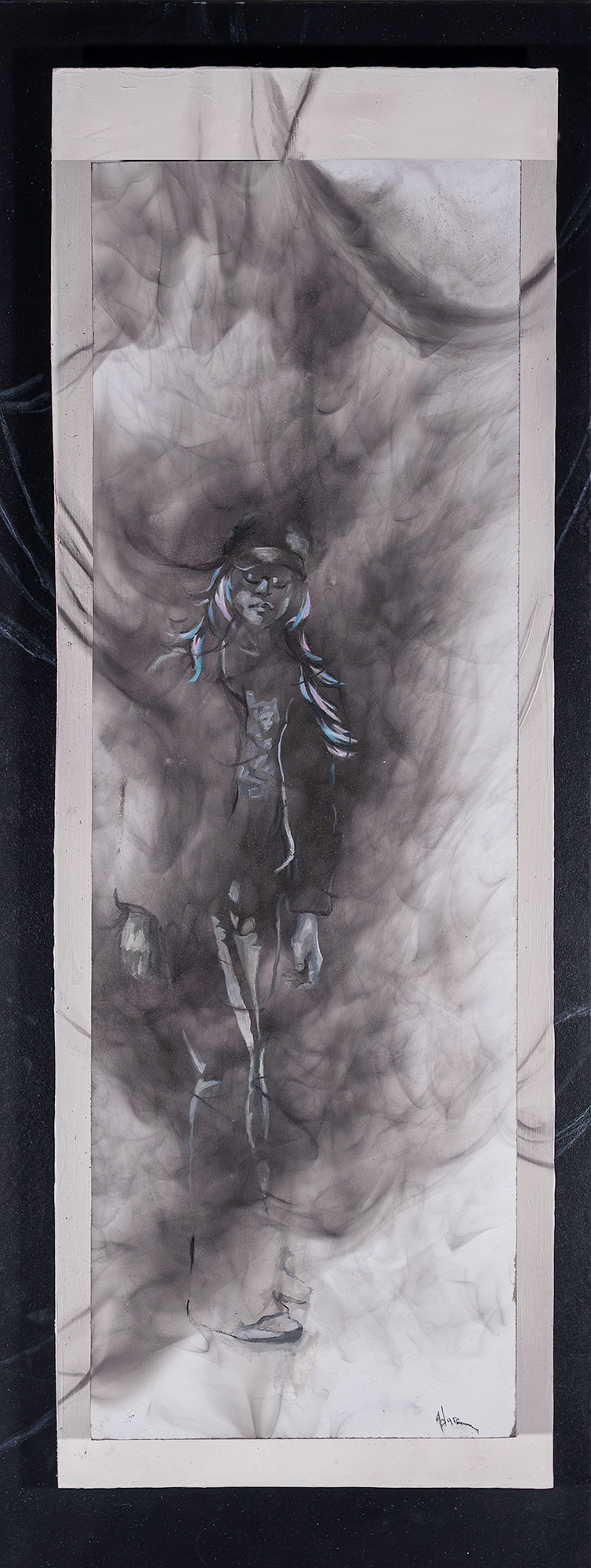
Seb
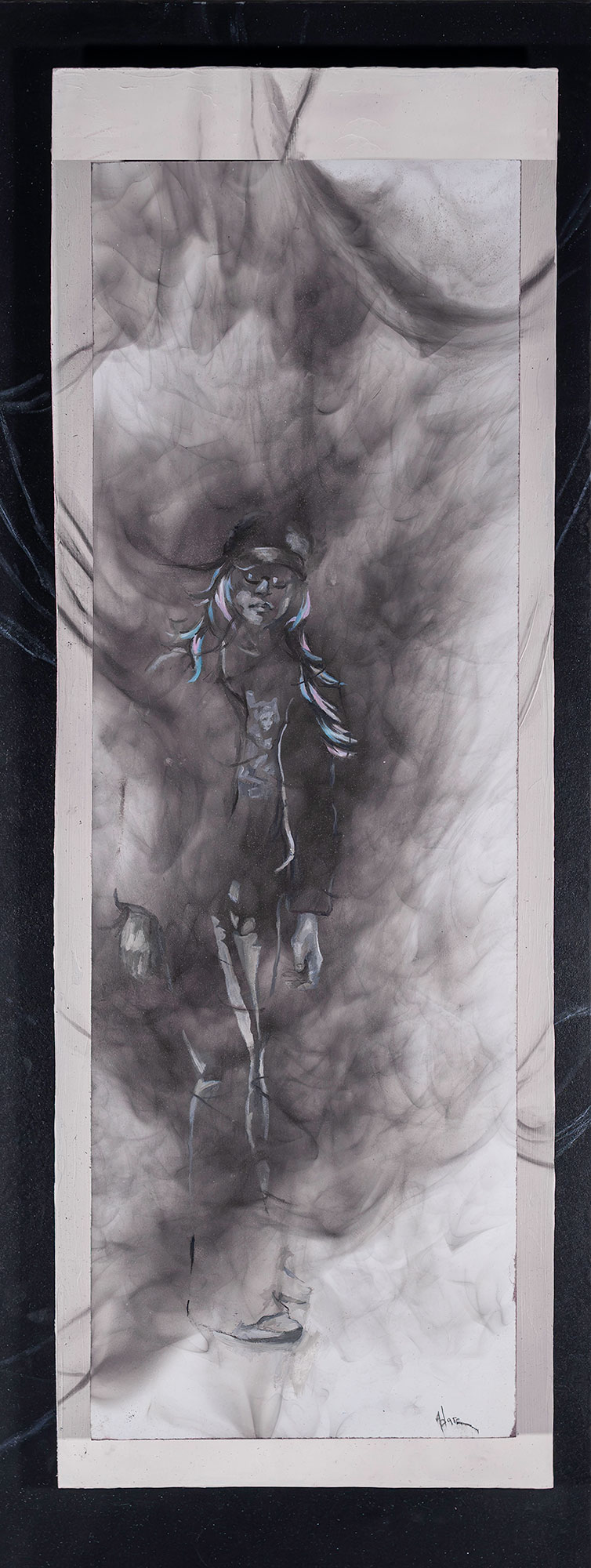
Re-indigenizing gender: from identity to pilina
At a community workday in South Kona, after circling for oli, we split into two groups: the men left to work on construction, and the women shuffled off to prepare food and tend the fire. I noticed the prickle of discomfort that often arises in these moments of binary sorting, suddenly self-conscious of how others might be perceiving me and where they expected me to go. I then noticed a kupuna shuffle off with the keiki: their age and ability made it clear which team they would be more useful in. I felt physically strong that morning, and began heaving cinder blocks into a wheelbarrow.
In my younger years, as I contended with gender identity, I often wondered, “who am I?”. But as I’ve aged, I’m more interested in the question, “how can I best show up?”. In the example of gender roles at the workday, it became clear that, while I wanted to feel seen and accepted, that was not my primary reason for being there. As someone with East Asian ancestry, this attention to the collective over the individual feels native to me, a relief from American identity politics. Living in Hawai’i amidst the queer and transphobia brought by Christian settlers and perpetuated by diverse publics, I’m become attuned to the erasure and reconstruction of māhū culture here. This has reawakened curiosity around my own Korean indigeneity, and made clear that in order to contribute effectively to different movements in Hawai’i, I must attend to my own ancestry.
Like Hawai’i, Korea became a vessel for American empire in the Pacific in the aftermath of WWII. Its indigenous spiritual culture was similarly dominated by Christianity, with the latter’s requisite intolerance for nonbinary gender and sexuality. Shortly before Hawai’i was made the 50 th U.S state, the DMZ separated my people in half, a divorce that remains frozen to this day. While U.S colonial and Christian impact in Korea has been well-covered, I’ve been curious to learn more about how Japan’s colonial occupation of Korea (1910-1945) impacted our people’s understanding of gender.
Merose Hwang’s writing on “colonial drag” in 1920s occupied-Korea describes shamanic practices that on the surface, assimilated to Japanese Shintoism, but under the surface, maintained subversive gender provocations. Though disdained by colonial recordkeepers Korean shamans managed to cleverly practice indigenous spirituality by using their exceptional status on the edge of society to gender-bend at will. Cross- dressing flower boys known as hwarangnyŏ were noted as “disguising themselves as women to come and go among noble homes”, while the Sungsinin Chophap, a female shaman group, performed ritualized drag of male warriors, sages, and national heroes. Creatively, I’ve explored this queer Korean history via a project in Seoul titled “Libretto: a Lecture-Performance by Sebseonbi”. Inspired by these gender-fluid Korean shamans, I donned mutant regalia, remixing traditional male and female hanbok garments with drag-inspired makeup, inventing a didactic, jester-like character to deliver an experimental bilingual music-lecture on “passing”, castratos, and the intersection of beauty, violence, and gender.
Ancestrally, I’ve been conducting research into my patrilineal history, connecting with distant family, deciphering genealogical documents, and groundtruthing our ancestral river and burial grounds. I am told that in Korean culture, it is the eldest male of the generation that is responsible for stewarding the Jokbo (the genealogical record) and whose bloodline continues the family tree. I like to think that by virtue of not being the eldest male of my generation, and claiming this responsibility anyways, I am simultaneously honoring a tradition that spans millennia, while making an intervention to replace its concern with age and gender with different criteria -- passion, attention, and care. From fixed identity and assigned duty, to relational, indigenous stewardship. Transparency, shapeshifting, camouflage
Trans historian Susan Stryker, who I’m also lucky to call a collaborator and friend, considers the etymology of the word “trans” to mean “crossing over”. As such, for me, queer-transness implies exceeding, trespassing, transgressing, non-compliance. Depending on one’s disposition, one might interpret this as a bold call to be a shining rebel, a beacon that inspires others to take up space. For me, it’s a loving invitation to become one with the shadows, protected from assimilation, consumption, and even perception, illegible under the cloak of camouflage.
I’ve spent a decade of my professional career in architecture defending transgender access to public space, namely by reimagining spaces that sort humans by gender, like restrooms and locker rooms. However, I lean more towards the belief that it is not the restroom that sorts us by gender, but other people. A room marked for “Men” could indeed be a place for feminine joy, if only its occupants relieved themselves of their policing impulse. It is not “gender”, nor the “Men’s Room” that pressures a trans woman into “passing” to survive, but those among us eager to punish gender outlaws.
For four years, I’ve worked as a camp counselor at the country’s longest-running summer camp for trans and nonbinary youth. In a sanctuary where one needn’t worry about being “clocked”, camp is a beautiful display of Judith Butler’s notion of gender performativity. In RuPaul’s words, "We're all born naked and the rest is drag".
In a utopic space where one doesn’t have to “pass” to survive, it grants us the permission to treat gender as the hilarious, joyful, theatrical art form that it can be. Unfortunately, much of the real world is not a sanctuary, and is instead actively hostile territory. For that reason, gender euphoria for me usually occurs in the protective haze of the underground nightclub. Unlike the restroom, the dancefloor is an equalizing space, where one can simultaneously be witnessed, celebrated, and held in community, while remaining an anonymous silhouette in a spectral, throbbing mass.
I’m acutely aware that camouflage is a privilege that not everyone can access, and may even be seen by some as reactionary or conservative. However, in an age of surveillance, pinkwashing, and “visibility” without marked improvements to trans livelihood, I believe that being intentionally opaque, unknowable, or shrouded in mystique, can be a form a resistance. However, despite my suspicion of invitations to be “out and proud” (especially from those outside our community), I know that for many, gender performance can be armor, or a lifeline. But for me, gender is more like a feather boa -- an amusing artifact of the past mostly used as a comedic prop, but that every so often, can be a serve.